
Sewer dosing
Septine sewer dosing

Who this is for
Utility operations managers, sewer network engineers and chemical procurement teams
Your operating priority
Assess a bespoke sewer H₂S-control chemistry on treatment performance and whole-of-operation cost, not the drum price alone.
Before you specify or buy
Establish a baseline, comparable dosing duty, monitoring locations and delivered treatment cost before comparing Septine with your current chemistry. Calibration and performance review can also be commissioned independently of product supply.
Critical Elixirs field work
Sewer dosing, access points and wet-well sampling
Real Critical Elixirs dosing equipment and field activity. These photographs illustrate delivery and monitoring work; they are not a photographic record of the specific Septine analysis window reported below.
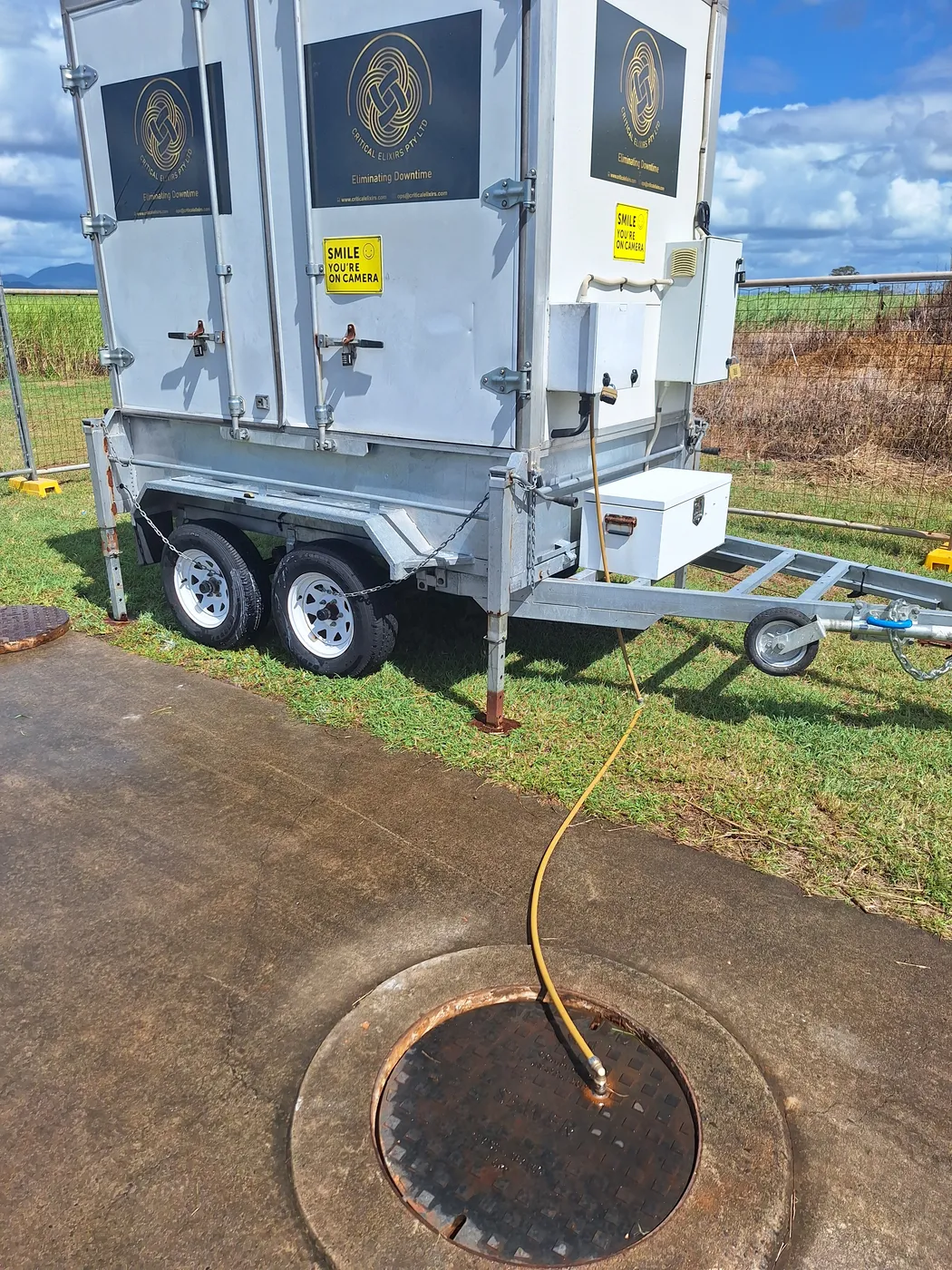
Trailer dosing equipment connected to a sewer access point. 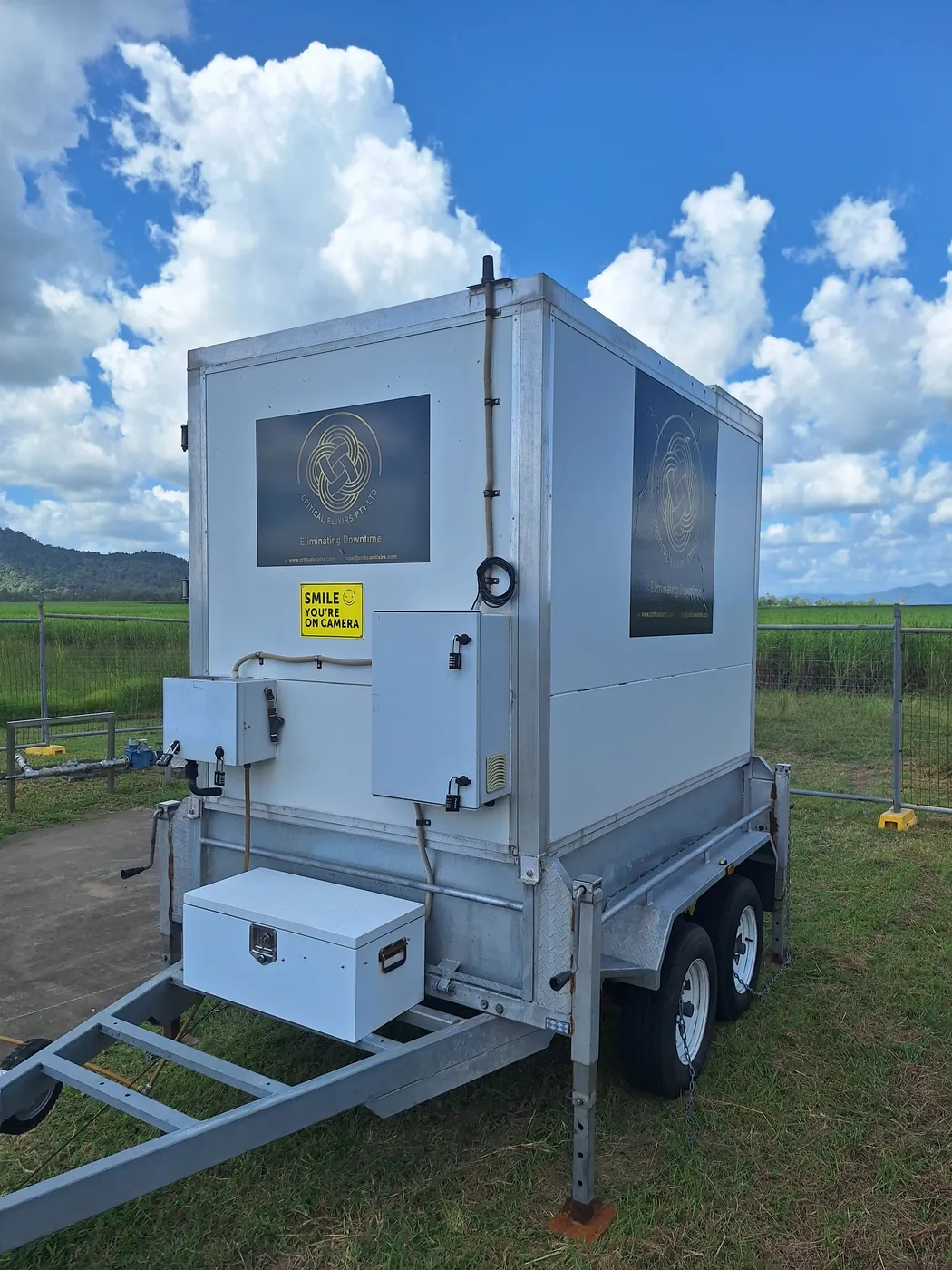
Trailer-mounted dosing equipment deployed beside a field access point. 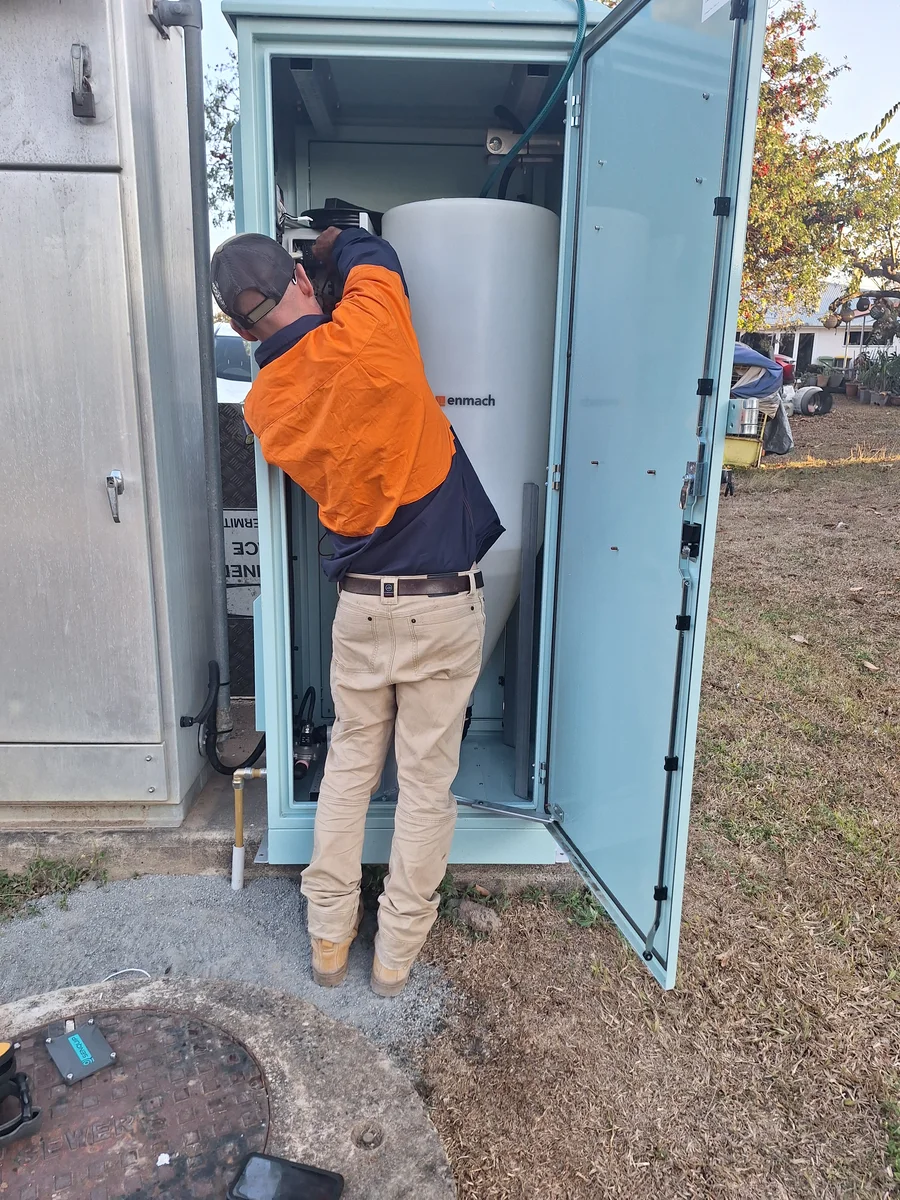
Hands-on field work at a dosing installation. Site procedures, equipment checks and duty-specific settings support ongoing operation. 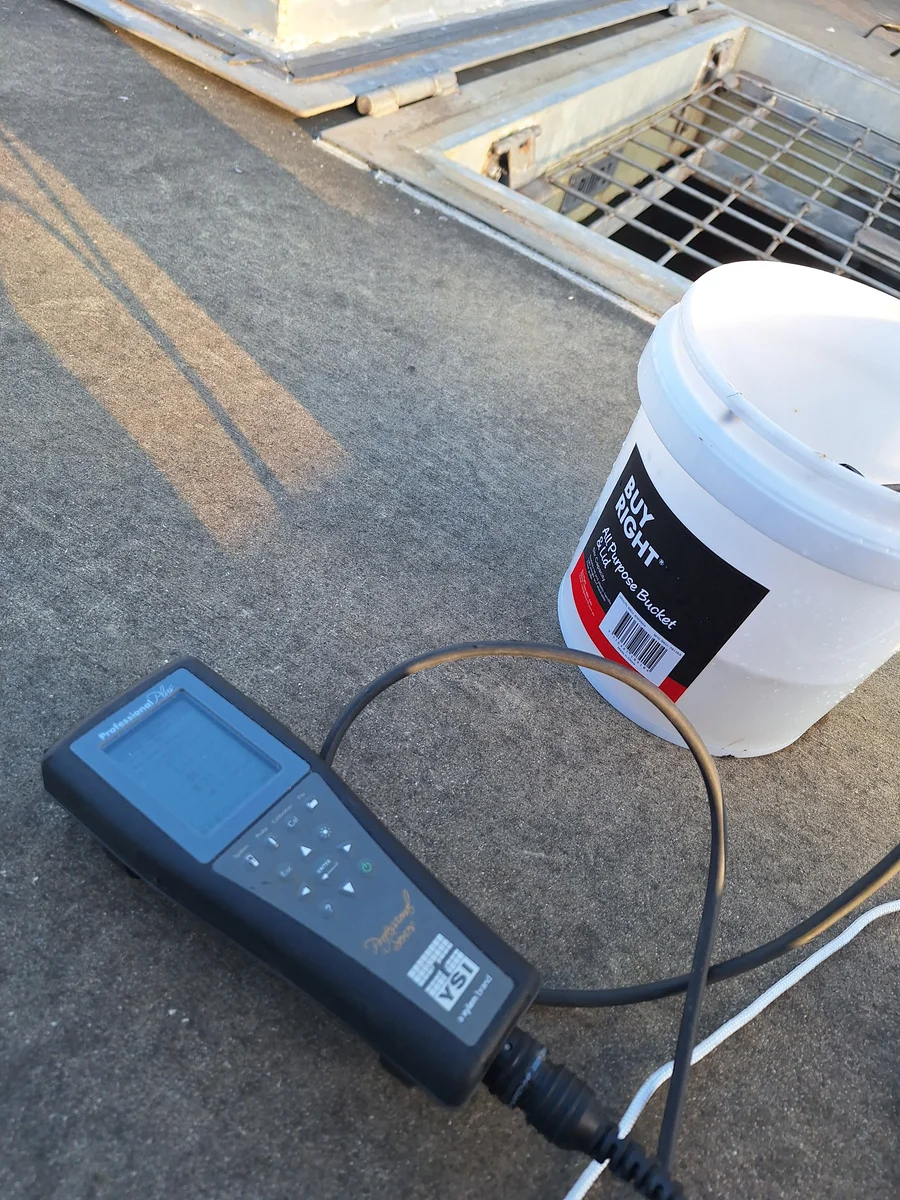
Water-quality sampling at a grated wet-well access point, with portable instruments and sample handling equipment.


Company-reported network example · Not independently verified
Septine V2: reported field development results
An owner-supplied evidence summary records a later Septine V2 development phase in an anonymous sewer network. The reported 16 September analysis describes the following operating observations.
- Reported Septine V2 delivered volume
- 100–110 L/day
- Reported downstream mean gas-phase H₂S
- 2.27 ppm
- Reported upstream-dosing treatment reach
- ≈3.6–3.65 km
The summary describes an earlier 30% magnesium hydroxide liquid period at approximately 175 L/day, from a different dosing point with approximately 1.95–2.0 km reported reach. The periods had different flows, treatment duties and operating conditions: this is not a season-matched or controlled comparison. Lower supplied litres alone do not prove lower cost or equivalent performance.
The Septine V2 analysis included weekends but excluded the recorded 23 August–9 September blockage period. The figures are retrieved historical analysis results, not independently recalculated from raw logger exports here. The mean is not a peak, a personal exposure measurement or a safe-entry assessment.
Septine and Suppressor are separate formulations. These Septine observations must not be combined with Suppressor results or with projected later formulations. Site trials need an identified batch, verified dose delivery and comparable downstream monitoring.
Source: Critical Elixirs internal field-evidence summary, 18 October 2026. Customer and monitoring-location identities are withheld.
What is covered
- Developed for sewer utility H₂S and sulphide management where site conditions and agreed treatment objectives make it suitable.
- Our reported Septine comparisons have shown advantages in strength and concentration per supplied volume, dose rate and generally treatment cost in the applications assessed; results are site- and comparator-specific.
- Septine supplied with dosing equipment, connection and calibration support.
- Performance and total treatment cost are application dependent. Compare options on site-specific data, including dose rate, delivered volume and the whole dosing arrangement.
- Dosing calibration and performance reporting can also be provided independently of the chemistry selected or its supplier.
- Dosing location, network conditions and monitoring reviewed with in-house RPEQ capability.
- Deployment is available for suitable projects across Australia, subject to scope, access and mobilisation logistics.
What we will ask you
- Network layout and dosing location
- Current chemistry, dose rate and delivered cost
- Access, power and security at the dosing point
- Monitoring data available for comparison
This page is information only. Pricing, availability and specifications are provided through an enquiry.
Straight answers
Frequently asked questions
- How should a utility compare Septine with its existing sewer dosing chemistry?
- Compare a defined treatment duty using baseline network data, actual delivered dose, relevant downstream measurements and total treatment cost. Include storage, resupply and operator effort. Septine is a separate formulation from Suppressor; neither product name nor concentration alone proves a lower operating cost.