
Testing
Jar testing

Who this is for
Civil environmental managers, consulting engineers and treatment operators
Your operating priority
Choose a defensible chemistry and starting dose for the water actually on site.
Before you specify or buy
Provide representative samples and target conditions; compare dose response, pH and settling, then allow for field verification and changing inflows.
Critical Elixirs field work
Product samples, field equipment and testing
Real product samples, sampling, measurement and dosing equipment. Photographs document the work shown; quantified outcomes require the relevant sampling context, method and records.
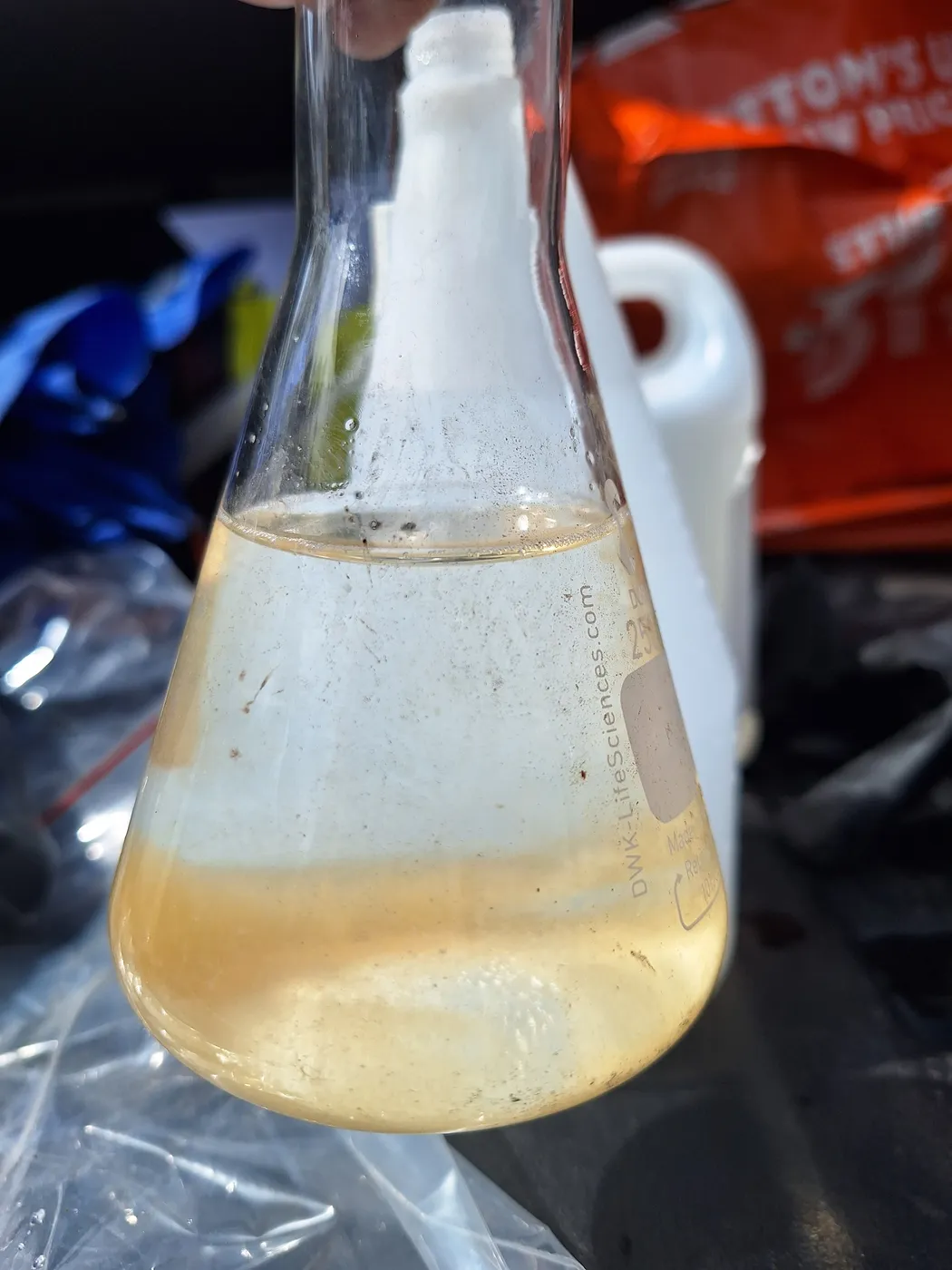
Jar test sample. Jar testing compares options on your own water. 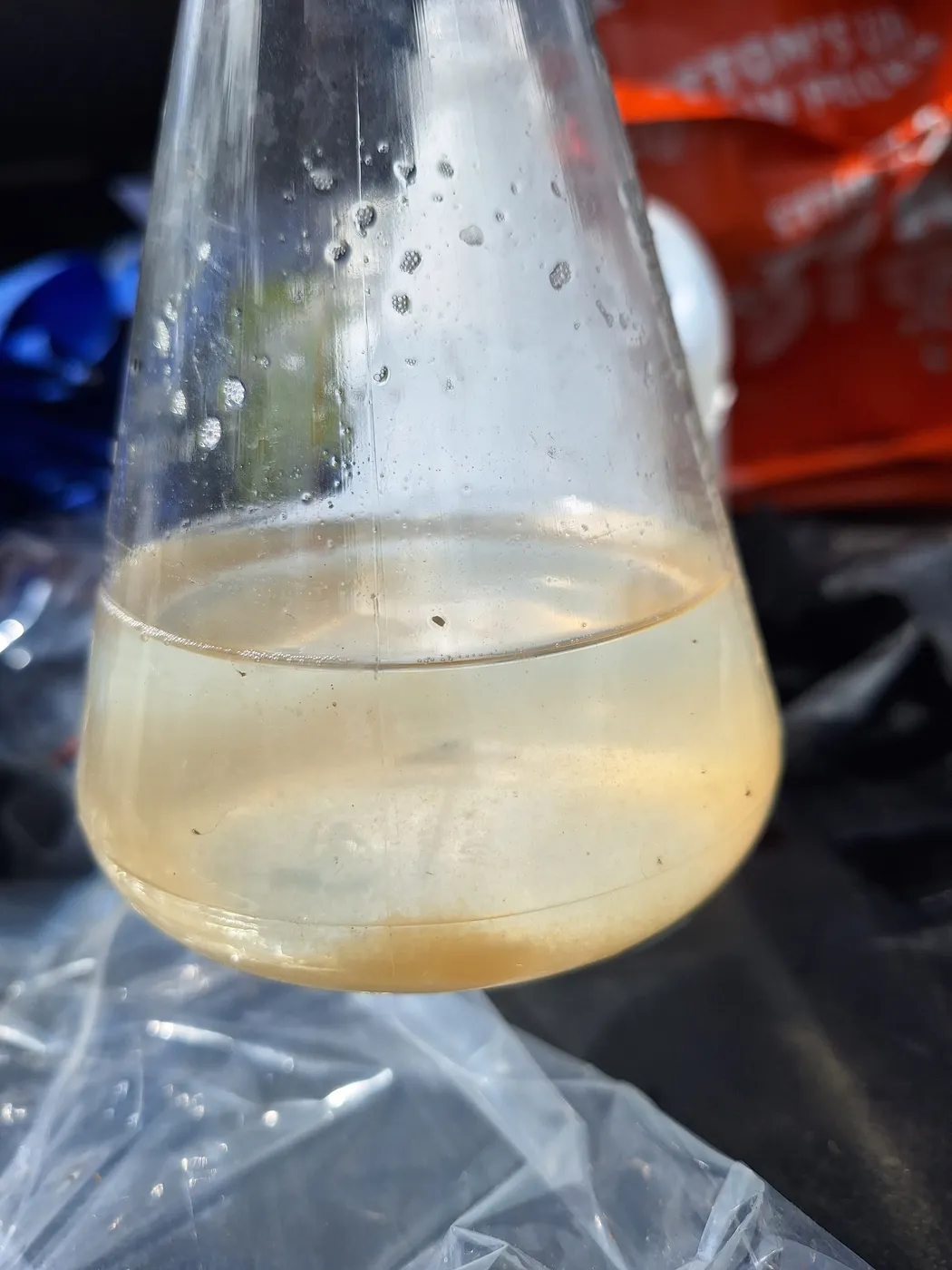
Water sample with visible settling in the flask.

What is covered
- Bench-scale comparison of selected coagulants and pH conditions.
- Observe floc formation and settling response under defined test conditions.
- Record test conditions and observations to inform further trials or process review.
- Testing informs a treatment decision; it does not guarantee universal compliance or full-scale performance.
What we will ask you
- Representative sample, source and collection time
- Current treatment and the question the test should answer
- Target conditions and approval requirements
This page is information only. Pricing, availability and specifications are provided through an enquiry.
Recent HES Basin jar testing · Company-reported result
From over 2,000 NTU to under 26 NTU.
Critical Elixirs reports this turbidity reduction in a recent HES Basin jar test. NTU is a measure of turbidity—the cloudiness caused by suspended material. The supplied photographs show the tested water samples and a treated-sample meter reading.


This is a sample-specific bench result, not a guaranteed field outcome or discharge approval. Chemistry, dose, mixing, settling time and instrument calibration records are not established by these photographs. Site approvals, representative testing and field monitoring determine the operating and release requirements.
How jar testing informs HES Basin treatmentStraight answers
Frequently asked questions
- Can jar testing determine the right dose for an HES basin?
- Jar testing compares chemical dose, pH response and settling on a representative sample and provides a starting point for site trials. Translate results to actual mixing, inflow and equipment delivery, then verify performance as conditions change. A bench result is not a universal operating dose or a discharge guarantee.
- Does a jar test guarantee full-scale results?
- No. Bench conditions differ from site mixing, flow and water variability. Testing informs selection and may indicate what to trial at scale.
- How much sample is needed?
- The required volume depends on the test plan and sample variability. The team can confirm sample collection and handling before testing.